
We all know the feeling, reading a document filled with jargon and technical terms that leave us scratching our heads. It’s frustrating, confusing, and frankly, unnecessary.
That’s where plain language comes in. Plain language is the clear, concise, and easy-to-understand way of communicating. It’s about using everyday words, avoiding technical terms, and structuring information logically.
Why is plain language so important?
1. It reduces errors
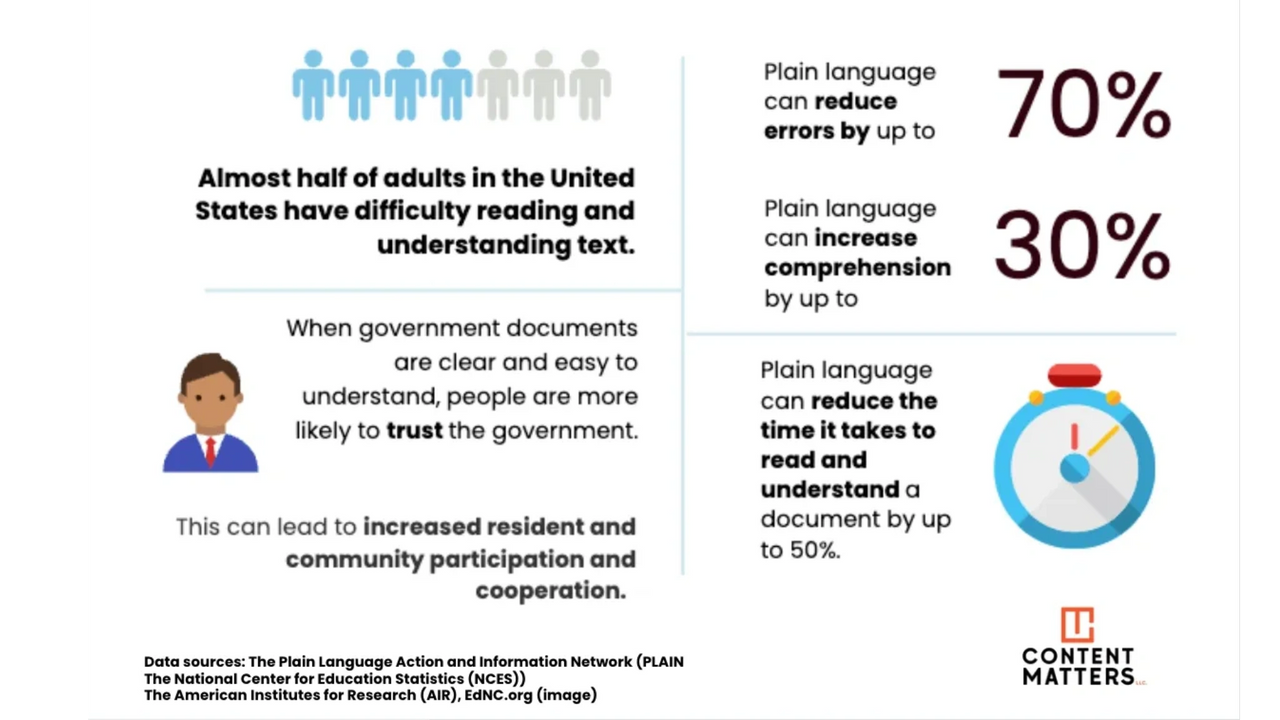
Plain language makes it easier for people to understand information, which means they are less likely to make mistakes. Studies show that plain language can reduce errors by up to 70%.
2. It increases comprehension
When information is presented clearly and concisely, people can better understand it. This can lead to improved comprehension, with studies showing a 30% increase when using plain language.
3. It saves time
Plain language makes it faster and easier to understand information. This saves time and resources, and it can reduce the time it takes to read and understand a document by up to 50%.
4. It builds trust
When people can easily understand information, they are more likely to trust the source. This is particularly important when dealing with government documents, as clear communication can help build public trust.
Why now?
The impact of plain language is far-reaching, affecting individuals and organizations alike.
Individuals
Plain language makes it easier for everyone to understand important information, such as healthcare instructions, financial documents, and legal documents.
Organizations
Organizations that use plain language can improve communication with their customers, employees, and stakeholders. This can lead to increased efficiency, productivity, and customer satisfaction.
Tips
Here are a few simple tips to start using plain language in your own writing.
- Use short, simple sentences. Avoid long, rambling sentences that can be difficult to follow.
- Choose everyday words. Avoid using jargon and technical terms. If you must use technical terms, explain them clearly.
- Organize your information logically. Use headings, subheadings, and bullet points to make your writing easy to scan and understand.
- Read your writing aloud. This will help you catch any confusing or unclear sections.
By using plain language, we can all make the world a little bit easier to understand.